Creative method · original examples
How do you evaluate the hook and pacing of a 30-second video ad?
Start with evidence, not a universal three-second formula. Identify what the opening promises, when the ad supplies a reason to believe it, and whether every beat changes the viewer's information or emotion. Then check the actual timestamps and visuals instead of rating the script in isolation.
1. Write down the opening promise
A hook creates an expectation. It may be a concrete problem, a result, a contradiction, a question or a recognizable situation. Quote the first spoken line and note the first available visual.
- Who is likely to recognize the problem?
- What specific detail makes the situation concrete?
- What question or result does the viewer now expect?
- Does the first visual support the words or merely decorate them?
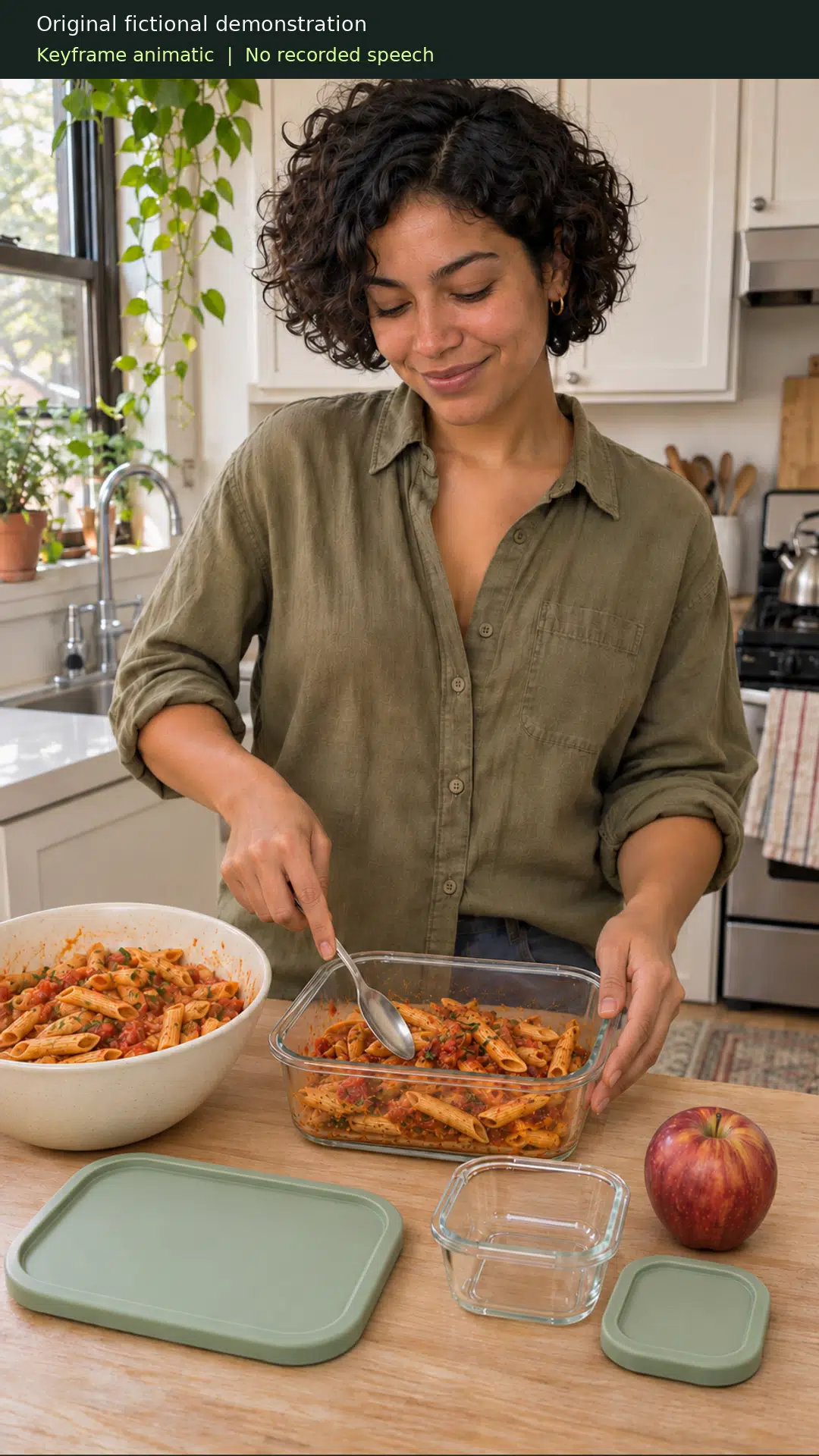
For example, our fictional routine video opens with: “I spent forty dollars on lunches last Tuesday, and still ate at my desk.” The amount and day create a specific expense problem. The viewer now expects either a cheaper routine or an explanation of the waste.
2. Check when the creative angle arrives
A relevant hook can still point to the wrong video. If the next beat does not clarify the angle, the audience may infer a different promise. In the example, the next line arrives at 00:05: packing only what the speaker actually eats. This narrows a broad budgeting hook into a realistic meal routine.
Try joining the concrete pain and the specific angle in the opening sentence. Keep the original as a control rather than assuming the shorter version is better.
3. Map information and proof by timestamp
| Beat | Question to answer | Evidence to inspect |
|---|---|---|
| 0–3 seconds | What is the tension or promise? | First line, first meaningful visual, on-screen text. |
| 3–10 seconds | Does the angle become clear? | The choice, mechanism or contrast that follows the hook. |
| 10–20 seconds | What changes or gets demonstrated? | A new action, example, proof or objection—not repeated setup. |
| 20–27 seconds | Why should the viewer believe it? | Visible demonstration, specific detail, limitation or trade-off. |
| Final seconds | Was the promise answered, and what comes next? | Payoff and one relevant CTA. |
4. Evaluate pacing as information change
Words per second can flag an overloaded read, but a higher number is not automatically worse. A quiet demonstration may need no narration; a dense list may be hard to understand even at a normal speaking rate.
Ask whether each beat introduces a new action, fact, proof, objection or emotion. If two consecutive beats make the same point, one may be compressible. If a new claim has no time for the viewer to see or understand its proof, the pacing may be too fast.
5. Distinguish creative judgment from performance
A late product reveal or weak proof may be a reasonable editorial finding. It does not prove that viewers left at that second. Retention requires actual audience data, and conversion requires campaign data. Do not convert a timeline observation into a fabricated drop-off graph.
A practical score-free checklist
- The opening promise is quotable.
- The intended audience is recognizable.
- The angle arrives before the promise becomes ambiguous.
- Each beat adds information or emotional change.
- Proof is visible or clearly marked unavailable.
- The ending answers the opening and requests one relevant action.
You can inspect this method in our complete fictional video creative audit, read the original hook examples, or audit your own short video.